
Nostradamus (1503–1566) was a French astrologer and writer, best known for his almanacs and astrological services to wealthy patrons, including Catherine de’ Medici. His most famous work, Les Prophéties (1555), is a collection of poems (quatrains) grouped into sets of 100, known as ‘Centuries.’ Many supporters believe he accurately predicted major world events. Let’s take a look at one of his best predictions!
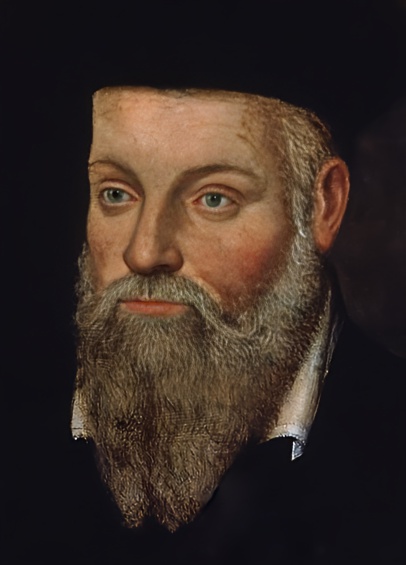
Les Prophéties,
Century 1, Quatrain 87:
Ennosigée feu du centre de terre,
Fera trembler au tour de cité neufve:
Deux grands rochers long temps feront la guerre,
Puis Arethusa rougira nouveau fleuve.
Below are three translations of Quatrain 1:87:
Google Translate Version
“Ennobled fire from the center of the earth
Will make tremble around the new city:
Two great rocks will wage war for a long time
Then Arethusa will redden a new river.”
ChatGPT Translation
“Earth-shaking fire from deep within the Earth
Will cause tremors around the new city:
Two great powers will be at war for a long time,
Until Arethusa stains the river with blood.”
Wikipedia Translation
“Earth-shaking fires from the world’s center roar:
Around “New City” is the earth a-quiver.
Two nobles long shall wage a fruitless war,
The nymph of springs pour forth a new, red river.”
What does this Quatrain Predict?
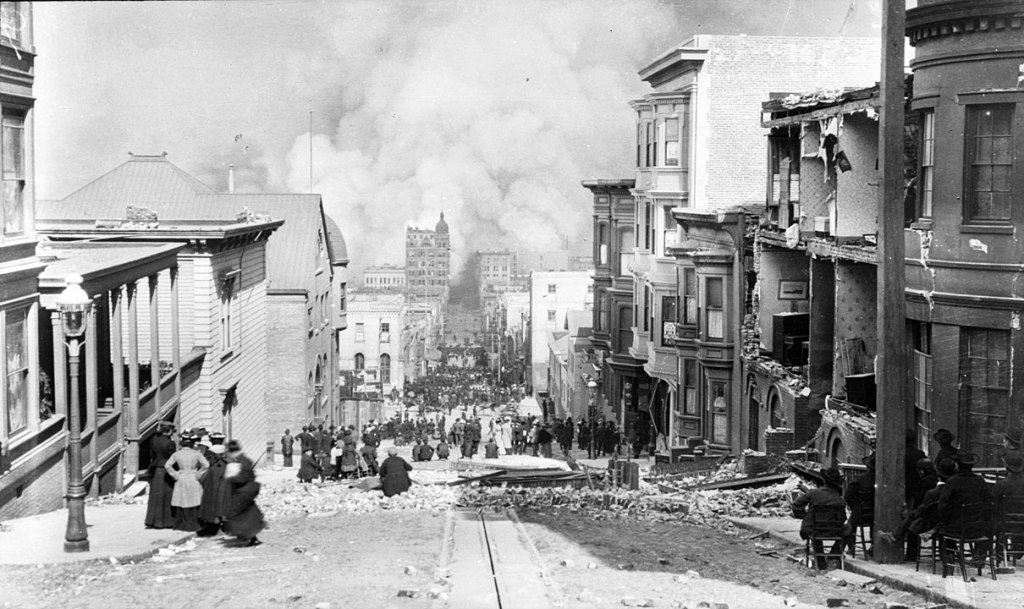
Is it the 1906 San Francisco Earthquake?
Quatrain 1:87 does align with the 1906 San Francisco earthquake, one of the most devastating disasters in U.S. history.
- “Ennobled fire from the center of the earth”
- The 1906 earthquake originated along the San Andreas Fault, the place where two tectonic plates of the Earth’s crust collide. Natural gas from ruptured gas lines caught fire and devastated San Francisco. The first line of the poem captures both the earthquake’s origin and the apocalyptic fires that followed, which burned for three days and consumed over 80% of the city.
- “Will make tremble around the new city”
- San Francisco, a burgeoning metropolis in 1906, fits the description of “new city”.
- Surrounding areas also suffered significant damage from the quake, fulfilling the imagery of trembling “around” the city.
- “Two great rocks will wage war for a long time”
- This line could symbolize the tectonic plates (the Pacific Plate and the North American Plate) pressing against each other along the San Andreas Fault. The term “wage war” metaphorically describes the pressure between the plates which caused the earthquake.
- “Then Arethusa will redden a new river”
- Fires following the earthquake may be represented by “redden a new river.” The flames spread chaotically through the streets, which could poetically be seen as rivers of fire.
- Alternatively, Arethusa, a nymph associated with springs and rivers, could symbolize the ruptured water mains and the desperate attempts to control the fires, leading to the flooding of certain areas.
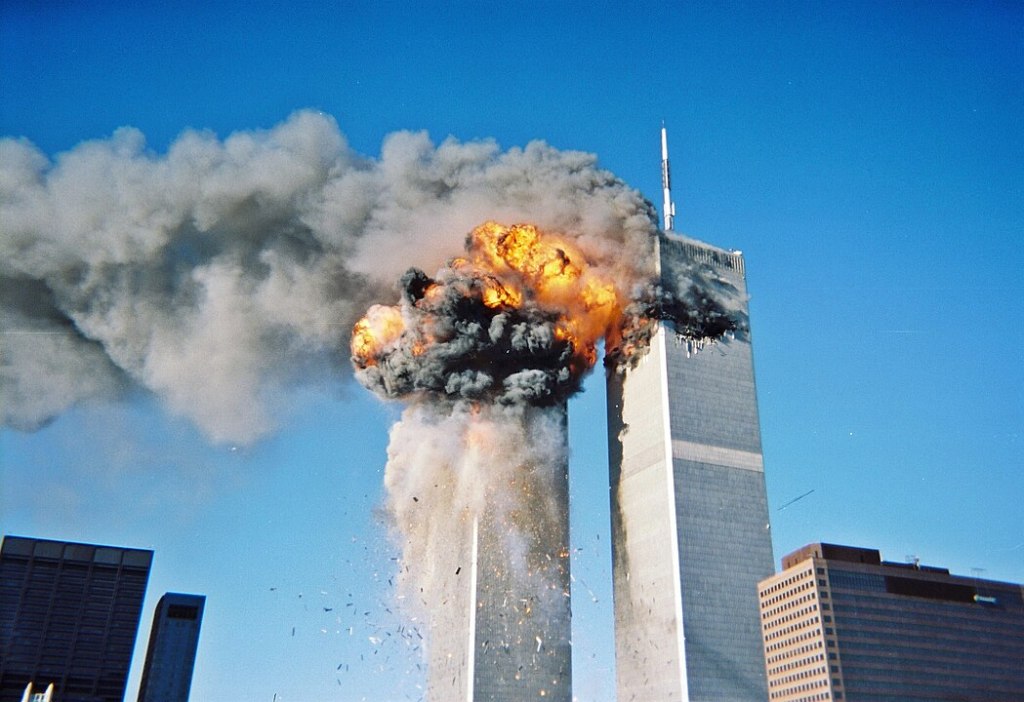
Is it September 11, 2001?
Quatrain 1:87 also aligns with the terrorist attacks of September 11, 2001.
- “Ennobled fire from the center of the earth”
- The phrase evokes the fiery destruction caused by the planes striking the Twin Towers. While “center of the earth” could be metaphorical, implying a seismic event for the world—shaking the very foundation of global security and peace.
- “Will make tremble around the new city”
- New York City was the epicenter of the tragedy, and “tremble” perfectly describes the towers collapsing and the terror that gripped not only New York but the entire world.
- “Two great rocks will wage war for a long time”
- The Twin Towers, monumental symbols of commerce and strength, are the “two great rocks.” Their destruction marked the beginning of the War on Terror, a “fruitless war” that endured for decades.
- “Then Arethusa will redden a new river”
- “Arethusa,” a nymph associated with rivers, could be an anagram for “the USA.” The “reddening of a new river” suggests the bloodshed and loss of life resulting from the attacks. The rivers of blood, both literal and symbolic, evoke the profound human cost of the tragedy and the ensuing wars.
Which interpretation is correct?
| Line from Quatrain | 1906 San Francisco Earthquake | 9/11 Interpretation |
| “Fire from the center of the earth” | Fires caused by the earthquake | Explosions in the Twin Towers |
| “Will make tremble around the new city” | Earthquake in San Francisco | Terror in New York City |
| “Two great rocks will wage war for a long time” | Tectonic plates causing the earthquake | The Twin Towers |
| “Arethusa will redden a new river” | Streets aflame with fire | Bloodshed after the attacks |
A False Dichotomy!
Asking which interpretation is correct assumes that there are only two options. A more likely possibility is that Nostradamus’s vague and metaphoric language helps the reader to fit the quatrain to multiple world events.
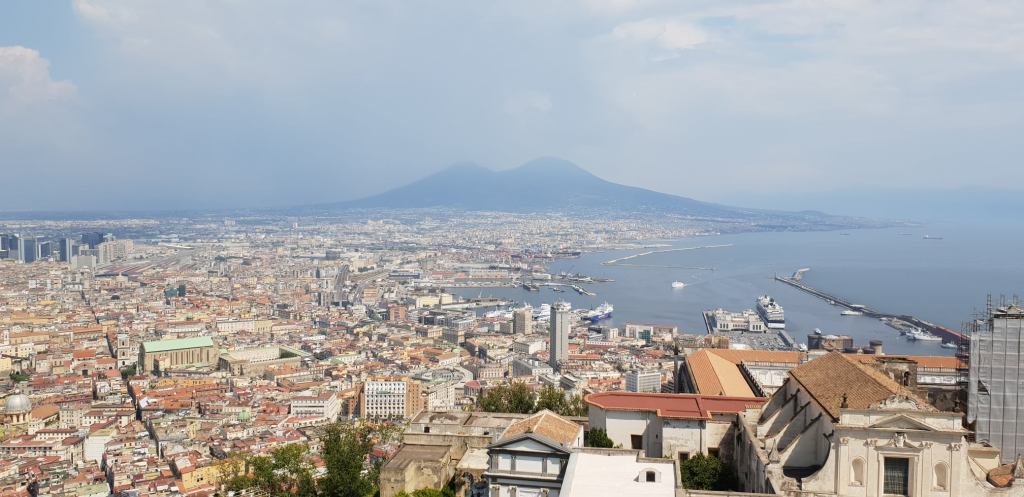
Was it Naples?
Quatrain 1:87 has also been associated with events that occurred over 500 years earlier in Naples, Italy.
- “Ennobled fire from the center of the earth”
- Mount Vesuvius has erupted repeatedly throughout history, including notable eruptions in 968 and 1036 CE. These eruptions sent streams of lava—akin to a “fire from the center of the earth”—toward Naples.
- “Will make tremble around the new city”
- Naples, literally meaning “new city,” (Neapolis in Greek) experienced earthquakes associated with Vesuvius’s eruptions. Historical records describe the devastation caused by such seismic activity, which “trembled” the surrounding areas.
- “Two great rocks will wage war for a long time”
- In medieval Naples, conflict raged between the Lombards of Capua and the Byzantine dukes of Naples, who battled for control of the city. The phrase “wage war” symbolically represents this prolonged power struggle.
- In French idiom, faire la guerre aux rochers—’to struggle fruitlessly’—aligns with the prolonged and inconclusive conflicts in medieval Naples.
- “Then Arethusa will redden a new river”
- Arethusa, a nymph associated with springs and rivers, connects to the lava flows described in medieval accounts of Vesuvius eruptions. Specifically, the Annales Cassini note that eruptions in 1036 sent sulfurous lava streams, which could poetically “redden a river.”
- The spring of Arethusa, located in Syracuse, Sicily, adds a symbolic link to southern Italy, reinforcing the connection to Naples and its surroundings.
Perhaps people value these ‘prophecies’ because they create a sense of inevitability. When significant events happen, believing that they were predicted helps people feel as if those events were part of a greater plan. This sense of predestination can provide reassurance, but it’s a false comfort, rooted in illusions rather than truth. Embracing uncertainty is far more empowering. When we accept that not everything is preordained or predictable, we open ourselves to possibilities, take ownership of our decisions, and develop resilience through confronting challenges directly.
 Behrens Science Museum